

What Contractors Should Know About the Growing Demand for Battery Storage Installation
By CSLS 4 min read
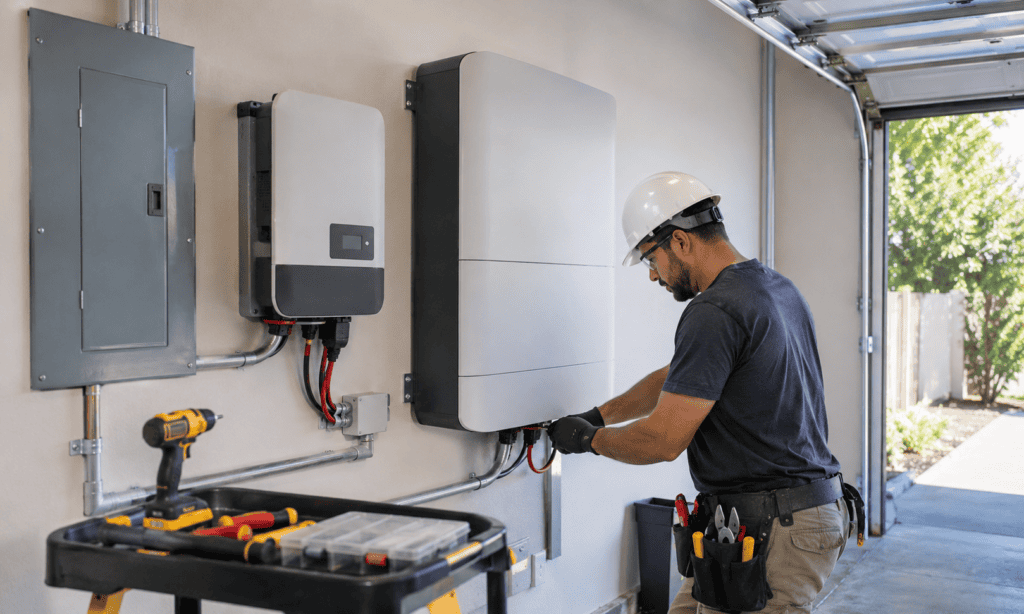
Walk through a newer neighborhood in Temecula or Fresno and look into the open garages. Next to the water heater and the bikes, you will see more and more gray cabinets on the wall. Those are home batteries, and each one was a job that someone had to be licensed to do. Many new contractors see this trend and assume they can step right into it. Sometimes they can. Often, the licensing picture is more complicated than they expect.
Battery storage is one of the most argued–over scope questions the CSLB has dealt with in recent years. If you understand the rules before you bid, you can grow with this market without putting your license at risk.
Why Demand Keeps Climbing in California
The biggest reason is economics. Under the Net Billing Tariff, which replaced the older net metering rules in 2023, homeowners get much less credit for solar power they send back to the grid. Storing that power and using it in the evening makes much more financial sense than it used to, so many solar customers now want a battery as part of the system.
Reliability matters too. Public Safety Power Shutoffs and heat wave grid alerts have made backup power a real concern for families, especially in fire–prone areas. California’s energy code is also moving new construction toward storage, with battery–ready requirements for many new homes. None of this means overnight riches. It means steady, long–term work for contractors who are set up to do it properly.
The Licensing Question Many New Contractors Get Wrong
The most common mistake is assuming a C–46 Solar license covers any battery job. It does not. The C–10 Electrical classification is the clearest path, because it allows standalone battery installations with no size limit and no requirement that solar be part of the job.
The C–46 rules are narrower and still changing. In 2024, the CSLB approved a regulation allowing C–46 contractors to install a battery only as incidental and supplemental to a solar installation, and only up to 80 kWh. That regulation was later stayed by a San Diego County court while the legal challenge plays out. In 2026, the Board proposed further changes that would let C–46 contractors add batteries up to 80 kWh to solar systems they installed earlier, and maintain and repair those batteries. Because this area is still moving, check the current status directly with the CSLB before you sign any battery contract. Do not rely on what a supplier or competitor tells you.
General contractors should be careful as well. A B license does not allow you to take a battery–only job, since a B contract generally needs 2 or more unrelated trades.
The Workforce and Safety Side of the Work
If you hold a C–10, your employees who do electrical work must be state–certified electricians or registered trainees. That affects your hiring, your payroll, and how fast you can grow. Plan for it before you take on volume.
Battery work also comes with real code requirements. Lithium–ion systems are subject to fire code rules on placement, spacing, and labeling, and most jobs involve permits, inspections, and utility approval for interconnection. Inspectors in different cities read these rules differently, so build extra time into your schedules until you know your local jurisdictions.
Building a Realistic Path Into Storage Work
If storage is your goal, think about which classification fits the work you actually want. The C–10 requires 4 years of journey–level experience within the last 10 years, along with passing the C–10 trade exam and the Law and Business exam. Document your electrical experience carefully now, because vague job descriptions are a common reason applications get delayed.
If you already hold a C–46, adding the C–10 may be worth it if batteries are becoming a large part of your work. Many solar contractors have made that choice so they are no longer exposed to a scope rule that keeps changing.
The Takeaway
Battery storage is a real and growing part of California construction, but demand alone does not permit you to do the work. Know which classification covers the job, follow the current CSLB rules, and build your crew around the certification requirements. Contractors who do that are in the best position to grow with this market over the long run.