
Why Water Damage Restoration Often Leads to Opportunities Across Multiple Construction Trades
By CSLS 3 min read
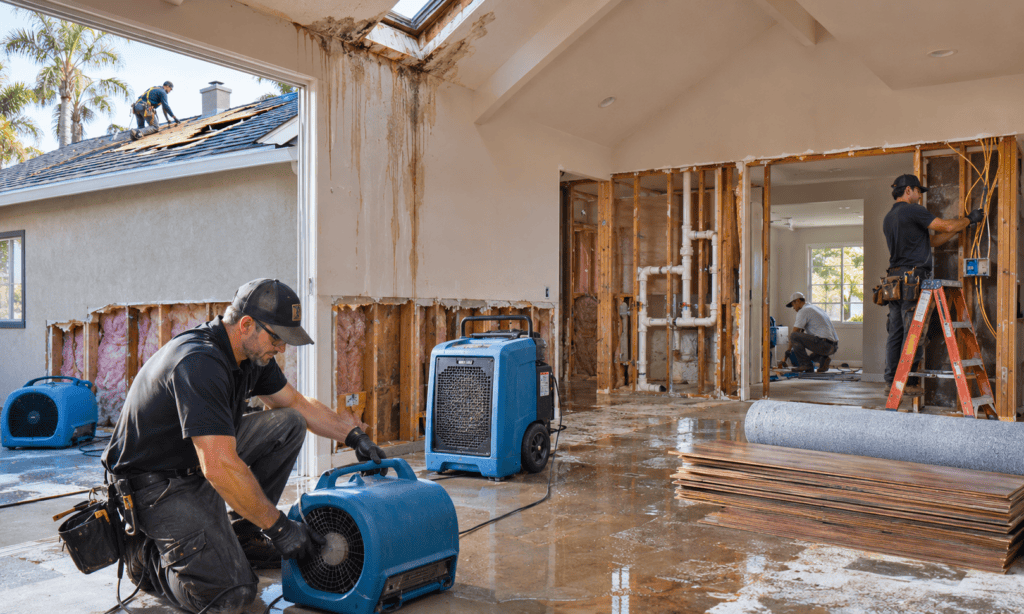
The plumber has fixed the upstairs leak, but the kitchen ceiling below is still wet. A strip of flooring near the wall has started to curl, and nobody knows how far the moisture traveled. The homeowner sees a single problem. A contractor sees several decisions: what can dry in place, what needs to come out, and who is qualified to put it back. That is why water damage restoration can introduce you to several trades without making them all yours to bid.
The Leak Is Only the Beginning
Stopping the leak and repairing the damage are different jobs. In this example, the plumber handles the failed pipe, while the restoration crew checks how far the water moved and sets drying goals. The ANSI/IICRC S500 standard treats inspection, drying, and project documentation as distinct parts of professional water damage restoration.
A useful handoff is more than a text saying the fans are gone. If you are pricing the rebuild, ask for moisture readings and photos so you know what was checked and which materials were left in place. The job may call for drywall and floor replacement, or it may turn out that the flooring can stay. A better estimate starts with what actually needs repair, not with the assumption that every wet surface needs replacement.
The Contract Matters More Than the Job Label
California’s Contractors State License Board, or CSLB, lists plumbing, drywall, and flooring as separate specialty classifications. If you pursue a drywall license, restoration companies can be a source of drywall work even when the larger project includes plumbing and flooring. You do not have to take responsibility for the whole rebuild to build a reputation in that trade.
If you are pursuing a Class B General Building license, count the trades required by the contract you would sign, not everyone who worked on the property. The usual test is at least 2 unrelated trades other than framing or carpentry, though framing or carpentry can be contracted on its own. For a prime contract covering only drywall, a Class B contractor must hold the drywall classification or subcontract the work to an appropriately licensed drywall contractor.
While your license is pending, do not assume a small invoice makes the work exempt. California’s minor work exemption applies only to qualifying minor work under $1,000 in total, including labor and materials, with no required building permit and no hired help. The exemption does not cover work that is part of a larger project.
Turn Jobsite Exposure Into Qualifying Experience
In exam prep, we make a distinction that matters here: watching a trade and doing it at journey level are not the same. CSLB generally requires 4 years of qualifying experience within the last 10 years in the classification you are seeking, and someone with firsthand knowledge must verify your work. Keep a record of what you actually did, when you did it, and who can verify it. A log that says only “water damage” tells you far less than a record of the drywall you hung, taped, and finished.
Unless a waiver applies, the qualifying individual takes the Law and Business exam and the exam for the chosen trade, both administered by PSI. The best classification to pursue is the one that fits the work you can document and want to keep doing. Restoration gives you a close look at several trades, but a dependable career can start by becoming the person others trust to handle a specific part of the rebuild.