

What Contractors Should Know About CSLB Fingerprinting and Background Review
By CSLS 4 min read
Plenty of applicants spend years building qualifying experience, study hard for 2 exams, and then lose weeks because a single sheet of paper sat forgotten on a truck dashboard. Others never apply at all because of something on their record from a decade ago. Both problems come from the same place: not understanding how fingerprinting and background review really work at the Contractors State License Board. The process is more manageable than most people expect, and knowing it ahead of time protects your timeline.
Who Gets Fingerprinted and When
Every license applicant must be fingerprinted. That includes each officer, partner, owner, and responsible managing employee listed on the application. If you are forming a corporation with 2 partners, all 3 of you must go through it, and the board reviews each person’s history.
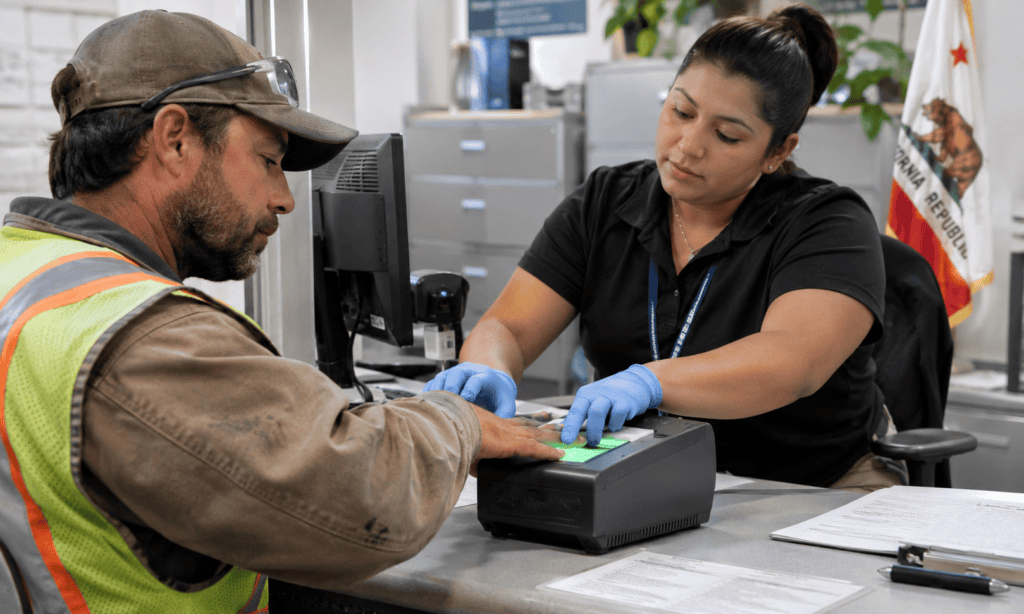
Timing matters. Fingerprinting happens after CSLB accepts your application as complete, which the board calls “posted.” At that point, each person listed receives instructions and a Request for Live Scan Service form (BCII 8016). Wait for that packet rather than getting printed on your own beforehand.
Plan on a $32 Department of Justice fee and a $17 FBI fee, plus a rolling fee set by each Live Scan location. Most local police and sheriff departments offer Live Scan, along with many private sites.
The Small Details That Cause Big Delays
Most fingerprinting delays have nothing to do with criminal history. They come from paperwork. Fill out the applicant information section completely, bring 3 copies of the form, and bring a valid ID such as a driver’s license or passport. The technician must enter your name exactly as it appears on your CSLB file, and your Social Security number must be correct.
The step people miss most often is the third copy. It must go back to CSLB within 90 days after you receive the packet, or your application may be voided. Mail it promptly and keep your own copy.
If your prints are rejected for image quality, you will be asked to try again. A second rejection leads to a name check through DOJ or the FBI, which can take a long time. Out–of–state applicants without Live Scan access use hard–copy fingerprint cards with a $49 processing fee, and that route can take 3 to 6 months or longer.
What the Background Review Actually Looks At
The biggest misconception is that any conviction ends your chances. It does not. CSLB reviews each applicant individually, and since AB 2138 took effect in 2020, the application no longer asks whether you have been convicted of a crime. The fingerprint report supplies that information instead.
Generally, CSLB can deny a license over a conviction only if it is substantially related to contracting duties and it happened within the last 7 years, or you were released from incarceration within the last 7 years, or you are currently incarcerated. The 7 year limit does not apply to serious felonies, crimes requiring sex offender registration, or felony financial crimes tied to fiduciary duties. When deciding whether a crime is substantially related, the board weighs how serious it was, how much time has passed, and what contractors actually do.
Some records cannot be used against you at all. These include convictions dismissed under Penal Code sections such as 1203.4, certificates of rehabilitation, pardons, and arrests that never led to a conviction.
Preparing If Your Record Is Not Clean
If you have a conviction, get organized early. Collect court records, proof that you completed probation, and any dismissal paperwork. If a dismissal does not appear on your DOJ report, you need to provide proof of it yourself.
CSLB may ask for mitigating information. Providing it is voluntary, but the responsibility for submitting evidence of rehabilitation is yours. Under CSLB regulations, the board may consider a misdemeanor applicant rehabilitated 3 years after release or after completing probation, and a felony applicant generally after 5 years, if no new related problems have come up. If an application is denied, you will be notified in writing and have 60 days to request a hearing.
The Bottom Line
Fingerprinting is a routine step that rewards attention to detail. Follow the instructions exactly, return your paperwork on time, and if your past includes a conviction, show up with documents instead of assumptions. A record is something you prepare for and explain. It is not an automatic disqualification.