
Why ADU Construction Requires Careful Coordination Between Trades
By CSLS 3 min read
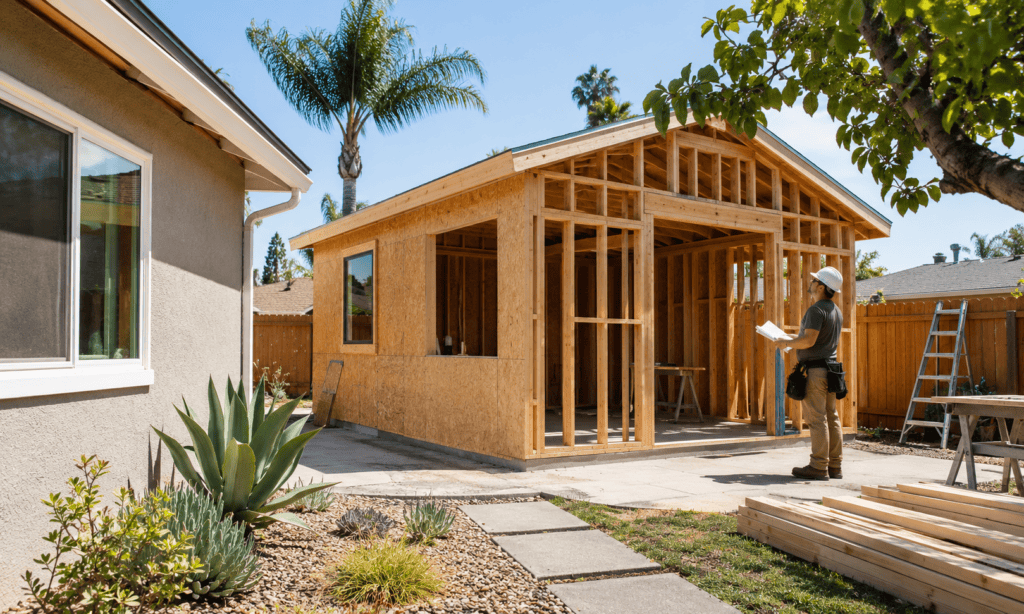
An accessory dwelling unit fits on a suburban lot, so it is easy to assume the build itself will be just as small and simple. It is not. An ADU packs the full range of a residential project, including grading, foundation, framing, plumbing, electrical, mechanical, roofing, drywall, and finish work, into a footprint that is often 800 square feet or less. In our experience working with contractors, the tightness of that footprint is exactly why coordination between trades matters more on an ADU than on a much larger job.
The Permit Shapes the Schedule
In California, ADU permits are handled ministerially, which means there is no discretionary hearing and no design review, provided the project meets objective standards. Recent state law tightened the timeline further: an agency must tell you within 15 business days whether your application is complete, and it generally must approve or deny a complete application within 60 days. That speed helps, but it also means the permit needs to be buttoned up before you mobilize. When plumbing or electrical scope is still unclear at submission, the approval may come back conditioned on details the trades have not yet agreed on, and you end up coordinating in the middle of the build instead of the front.
Sequencing Is the Real Skill
The trades on an ADU are not working independently; they are working in a fixed sequence with almost no slack between steps. Foundation work has to be ready before framing. Rough plumbing, electrical, and mechanical have to go in before insulation and drywall, and those lines all intersect in the same tight walls and cramped attic space. A general building contractor is licensed to manage a project involving 2 or more unrelated trades and can subcontract the specialty work, but the scheduling responsibility sits with you. When one subcontractor slips by a week, the delay does not stay contained; it pushes everyone else back and can leave a crew standing on a job with no work ready for them.
Watch the Interfaces Between Scopes
The problems that show up at final inspection almost always live at the boundary between 2 trades. The plumber needs a rough opening the framer did not leave. The HVAC unit does not have the clearance the mechanical code expects. The water heater location conflicts with an electrical panel. These are not code violations by any single trade; they are coordination failures. Walking the job with your key subcontractors before rough work starts, and again before close-in, is the cheapest way to prevent them.
Small Project, Full Discipline
An ADU rewards the same discipline you would apply to a custom home. Build the sequence, confirm the scope, and stay ahead of the interfaces. Contractors who treat a small unit as a big project in miniature tend to run it smoothly and finish strong, which is what leads to the next referral.